Vegetables with High Water Content and Low Energy Density
Educational content only. No promises of outcomes.
Explore factual information about the water percentage, energy density, and structural characteristics of everyday vegetables. This resource presents data-driven insights into nutritional composition without medical recommendations or dietary advice.
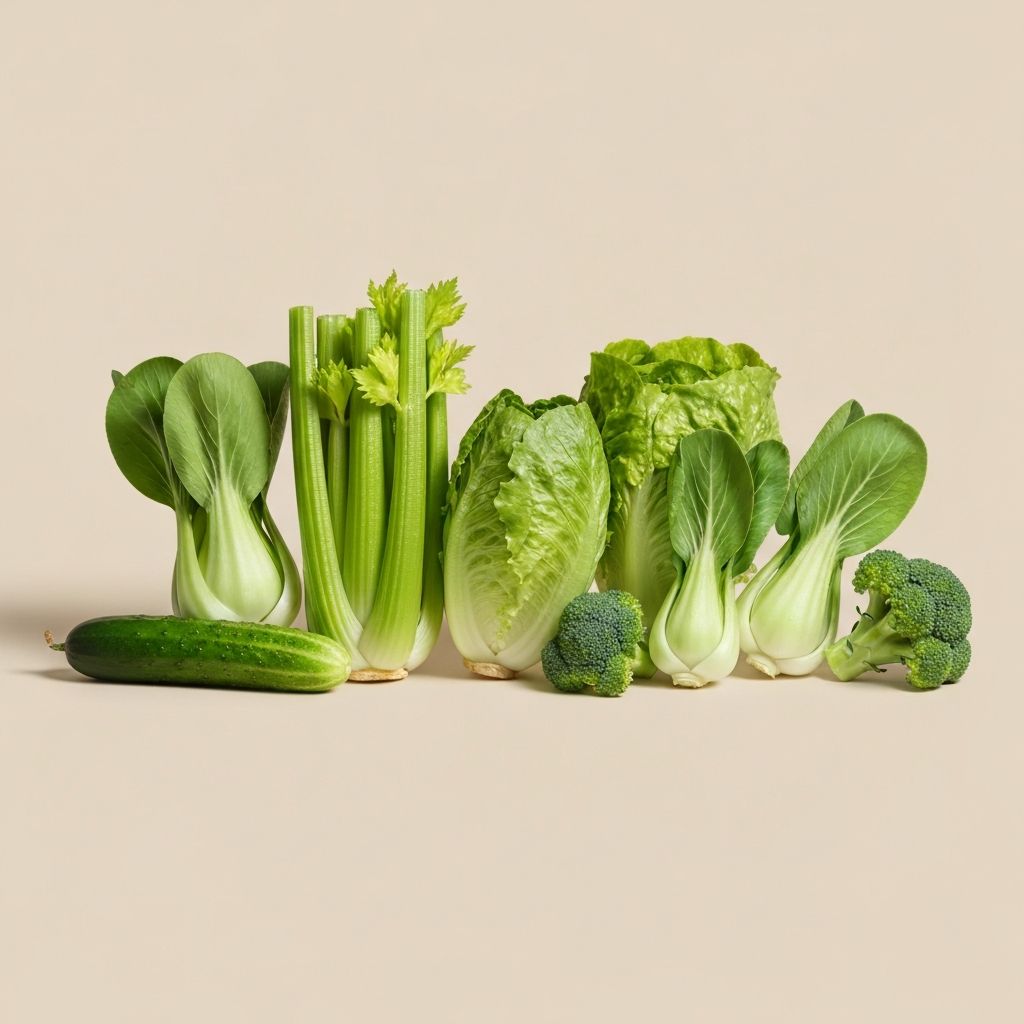
Understanding Energy Density in Vegetables
Energy density refers to the amount of calories contained in a given weight of food, typically measured as kilocalories per 100 grams. This concept helps explain why different vegetables vary significantly in their energy content despite similar portion sizes. Understanding water and fibre content provides context for this variation.
Key Factors Contributing to Low Energy Density
Several interconnected factors determine why certain vegetables have low energy density values.
High Water Content
Many vegetables consist of 80–95% water by weight. Water contains zero calories, meaning vegetables with exceptionally high water percentages naturally have lower overall energy density regardless of their other components.
Low Fat and Protein Levels
Vegetables are typically low in fat and protein compared to other food groups. Fat provides 9 kilocalories per gram, while protein and carbohydrates provide 4 kilocalories per gram. The minimal fat content in most vegetables contributes significantly to their low overall energy values.
Fibre and Cellular Structure
Many low-density vegetables contain substantial amounts of dietary fibre, which adds weight without significant caloric contribution. The cellular structure—how water, air, and solids are arranged—also influences the perceived fullness and satiety characteristics of vegetables when consumed.
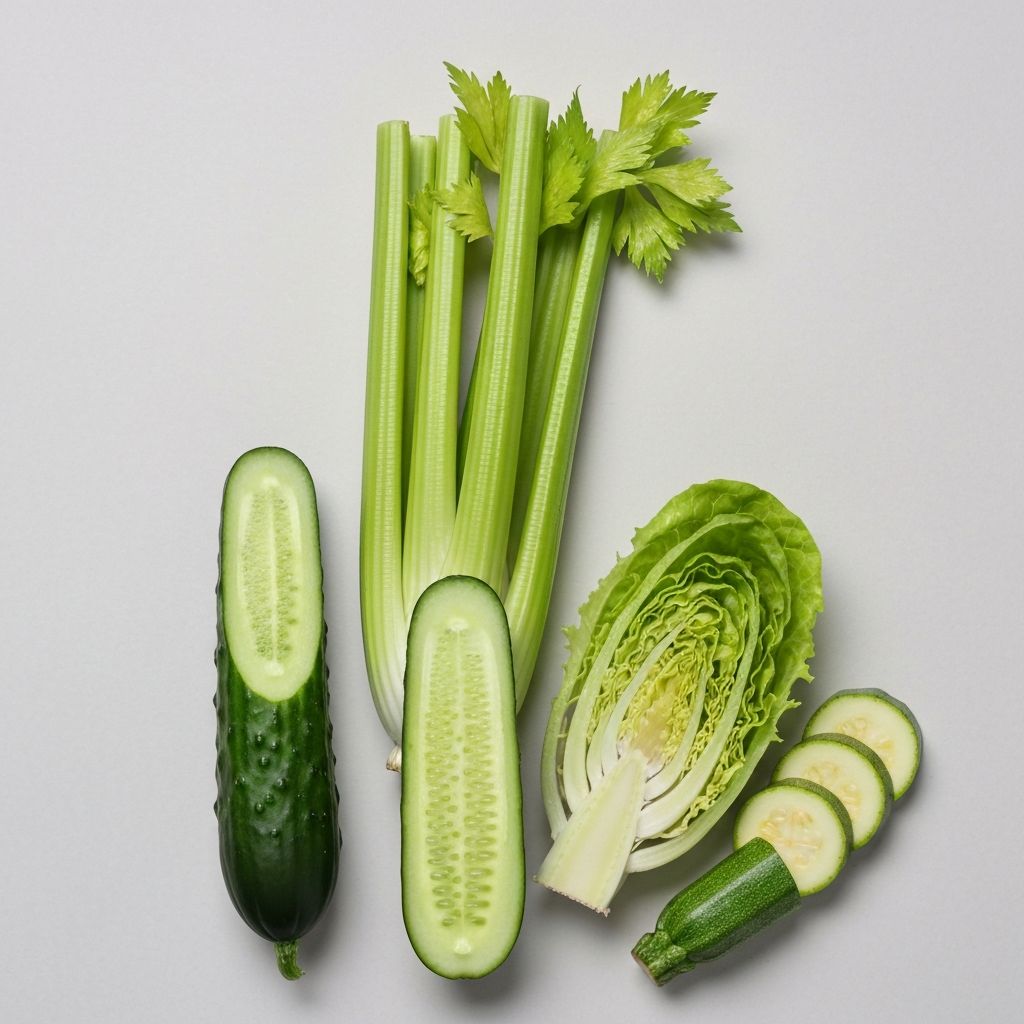
Leafy Greens Category Overview
Leafy greens represent one of the lowest energy density categories among commonly available vegetables. Their structure and composition create distinctive characteristics worth examining.
Spinach
Raw spinach leaves contain substantial water and minimal fat. The cellular structure creates surface area that contributes to perceived volume.
Lettuce (Iceberg)
Among the lowest energy density vegetables. The crisp, cellular structure contains mostly water with minimal solids.
Kale
Kale contains higher fibre and slightly more protein than other leafy greens, yet remains in the low energy density range.
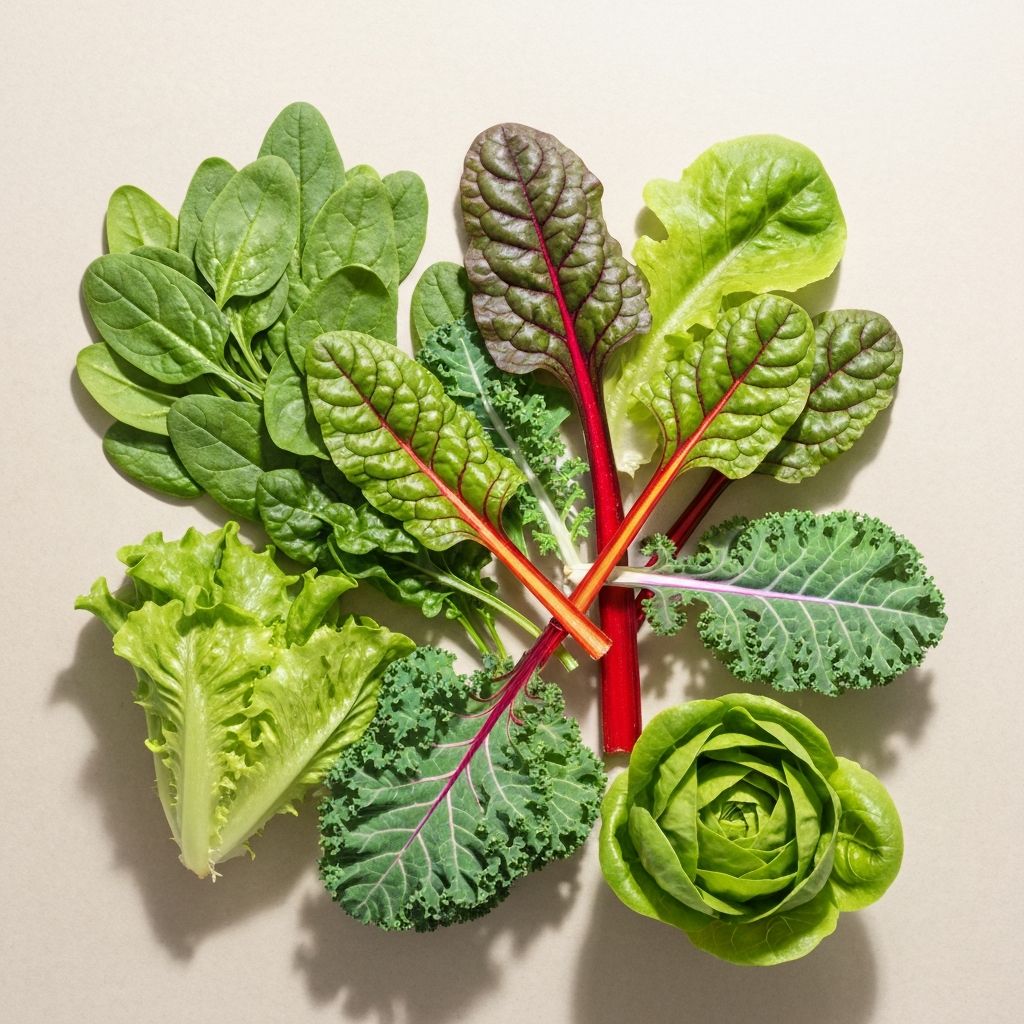
Cruciferous Vegetables
The cruciferous family (Brassicaceae) includes vegetables known for their distinctive structure and nutritional profiles. Their cellular arrangement and water content contribute to their position among lower-density options.
Broccoli
Raw broccoli florets consist primarily of water with cellular cavities. The dense floral structure creates high surface area per unit weight.
Cauliflower
Cauliflower shares structural similarities with broccoli but contains slightly more water and less protein, resulting in marginally lower energy density.
Cabbage
The layered structure of cabbage contains substantial water between cellular layers. Different varieties (green, red, napa) show minor variations in composition.
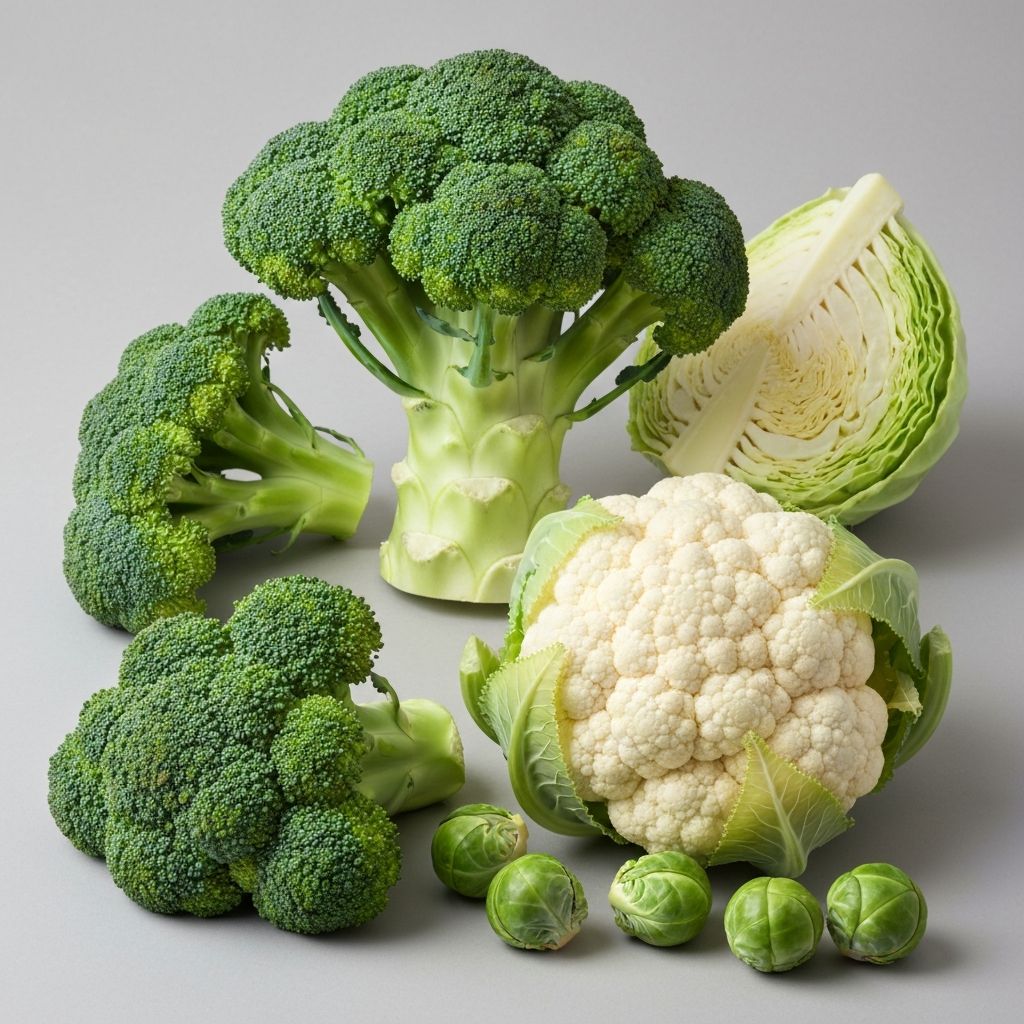
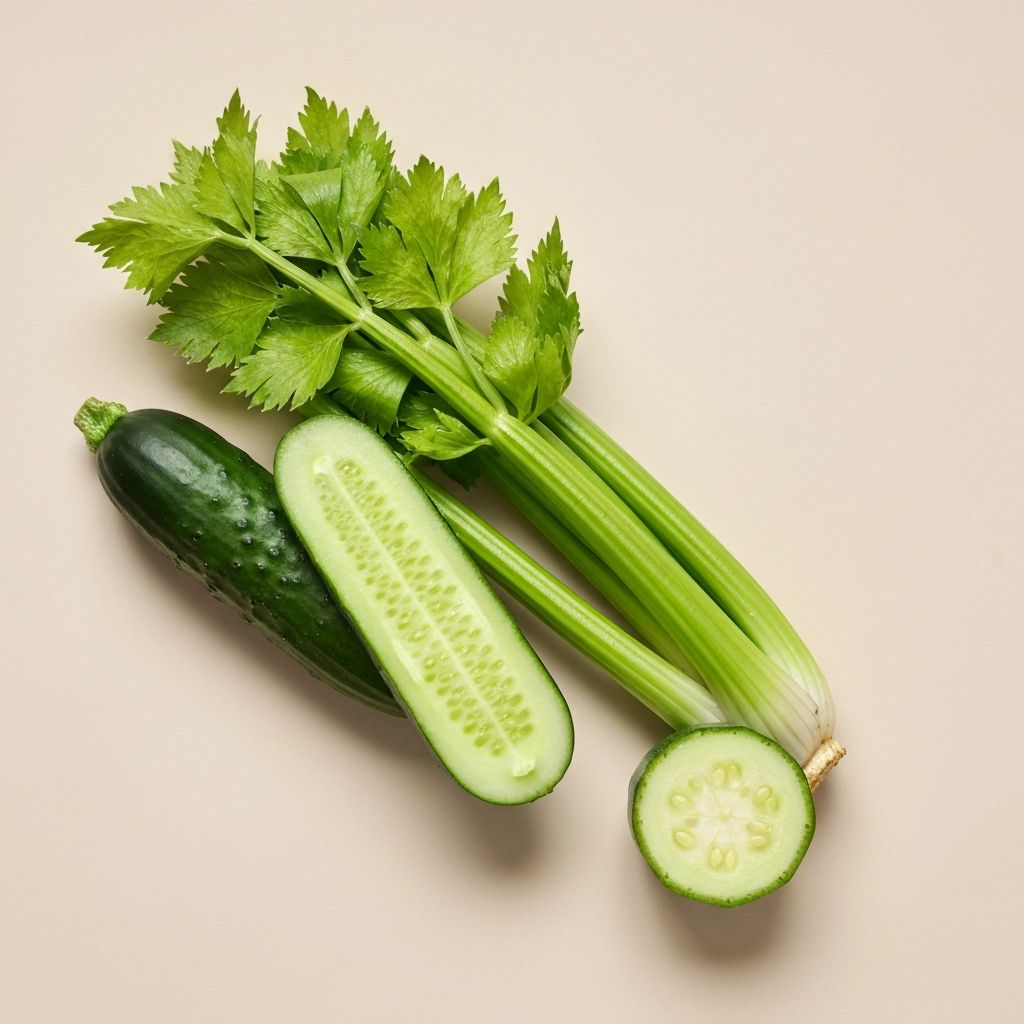
Cucumbers, Celery & Courgettes
These vegetables represent the extreme end of the high-water, low-density spectrum. Their structural characteristics create distinctive textural and compositional profiles.
Cucumber
Among the lowest energy density vegetables. The seed cavity and surrounding cellular structure are predominantly water, with thin-walled cells creating a crisp texture.
Celery
Celery's distinctive structure comprises water-filled cells separated by fibrous strands. The rigid cell walls provide structural resistance even when raw.
Courgette (Zucchini)
Raw courgettes contain extensive water within a thin-walled cellular matrix. The seeds and flesh are approximately 95% water by composition.
Root & Other Low-Density Vegetables
Beyond leafy greens and cruciferous vegetables, other produce items also feature relatively low energy density due to similar compositional factors.
| Vegetable | Water Content | Energy Density | Fibre Content |
|---|---|---|---|
| Radish | ~95% | ~16 kcal/100g | ~0.7g/100g |
| Tomato | ~95% | ~18 kcal/100g | ~1.2g/100g |
| Bell Pepper | ~92% | ~31 kcal/100g | ~1.9g/100g |
| Mushroom (Button) | ~92% | ~22 kcal/100g | ~0.7g/100g |
| Asparagus | ~93% | ~20 kcal/100g | ~2.1g/100g |
| Pak Choi | ~95% | ~13 kcal/100g | ~1.5g/100g |
Approximate nutritional composition values based on observational food composition databases. Individual samples may vary.
Comparison Table of Common Vegetables
Comprehensive reference data for frequently encountered vegetables, organized by energy density.
| Vegetable | Water % | kcal/100g | Fibre g/100g | Category |
|---|---|---|---|---|
| Lettuce (Iceberg) | 96% | 15 | 0.6 | Leafy Green |
| Cucumber | 96% | 16 | 0.5 | High-Water |
| Celery | 95% | 16 | 0.7 | High-Water |
| Radish | 95% | 16 | 0.7 | Root |
| Pak Choi | 95% | 13 | 1.5 | Leafy Green |
| Tomato | 95% | 18 | 1.2 | Fruit |
| Courgette | 95% | 17 | 1.1 | High-Water |
| Asparagus | 93% | 20 | 2.1 | Stalk |
| Mushroom | 92% | 22 | 0.7 | Fungus |
| Bell Pepper | 92% | 31 | 1.9 | Fruit |
| Cauliflower | 92% | 25 | 2.4 | Cruciferous |
| Cabbage | 92% | 25 | 2.4 | Cruciferous |
| Spinach | 91% | 23 | 2.7 | Leafy Green |
| Broccoli | 89% | 34 | 2.4 | Cruciferous |
| Kale | 84% | 49 | 3.6 | Leafy Green |
Frequently Asked Questions
Related Educational Articles
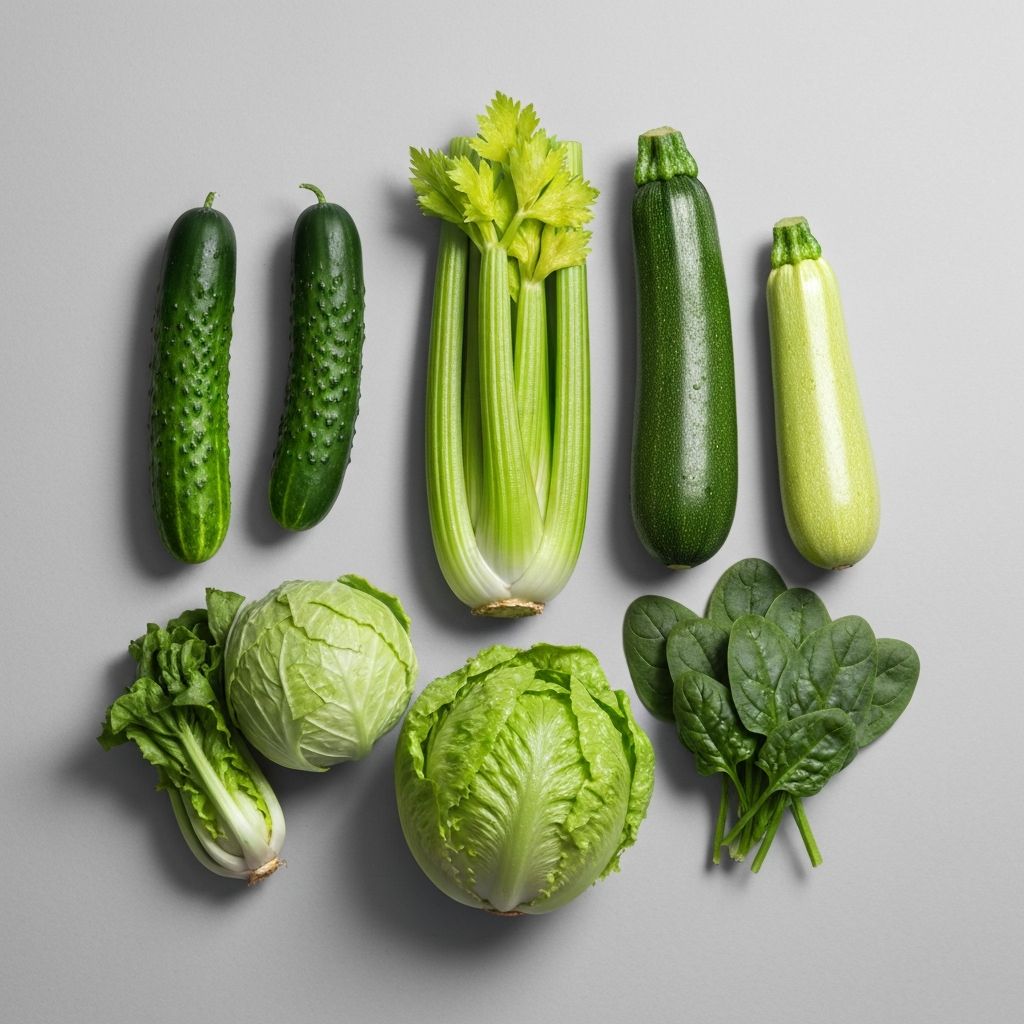
Water Content Across Vegetable Families
Comparative overview of hydration levels across different vegetable categories and how water percentages influence energy density values.
Explore more details →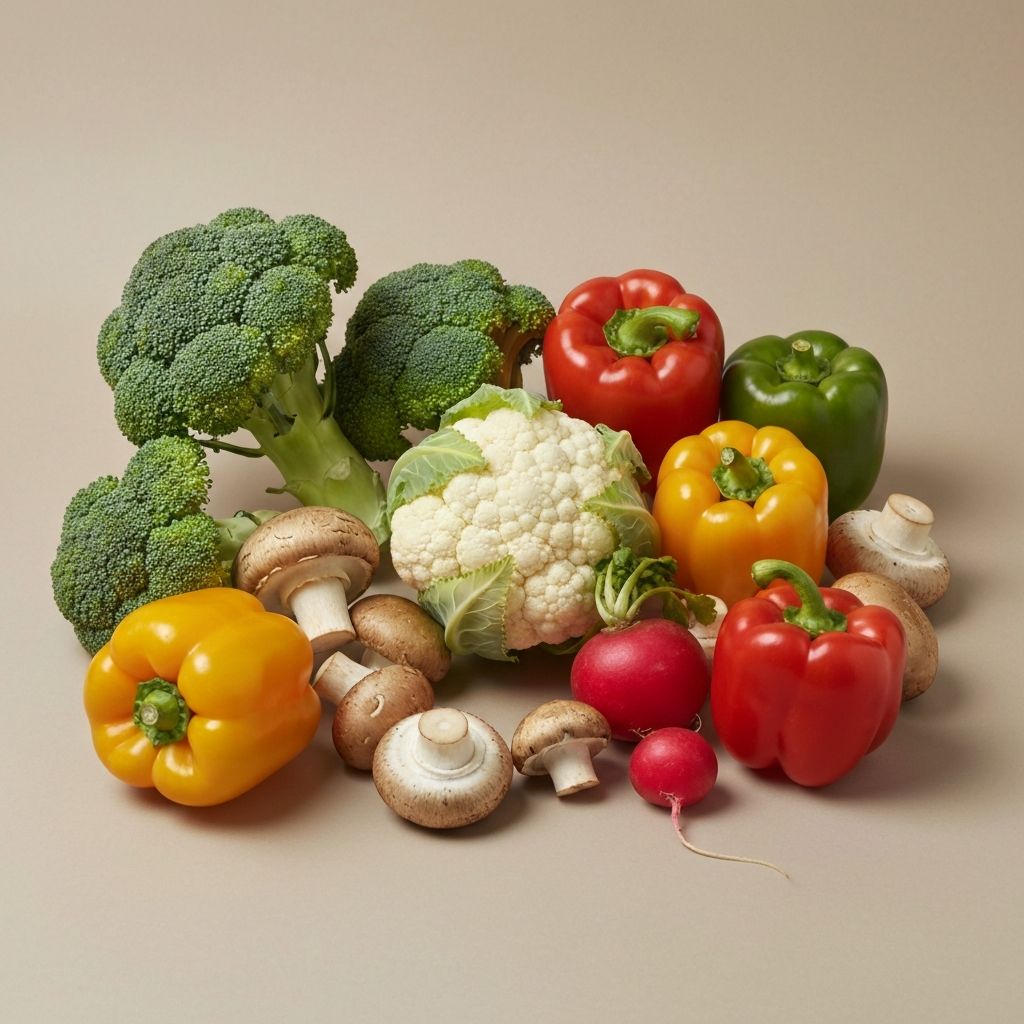
What Determines Energy Density in Produce
Examination of factors extending beyond water percentage that influence how many calories are present in vegetables.
Explore more details →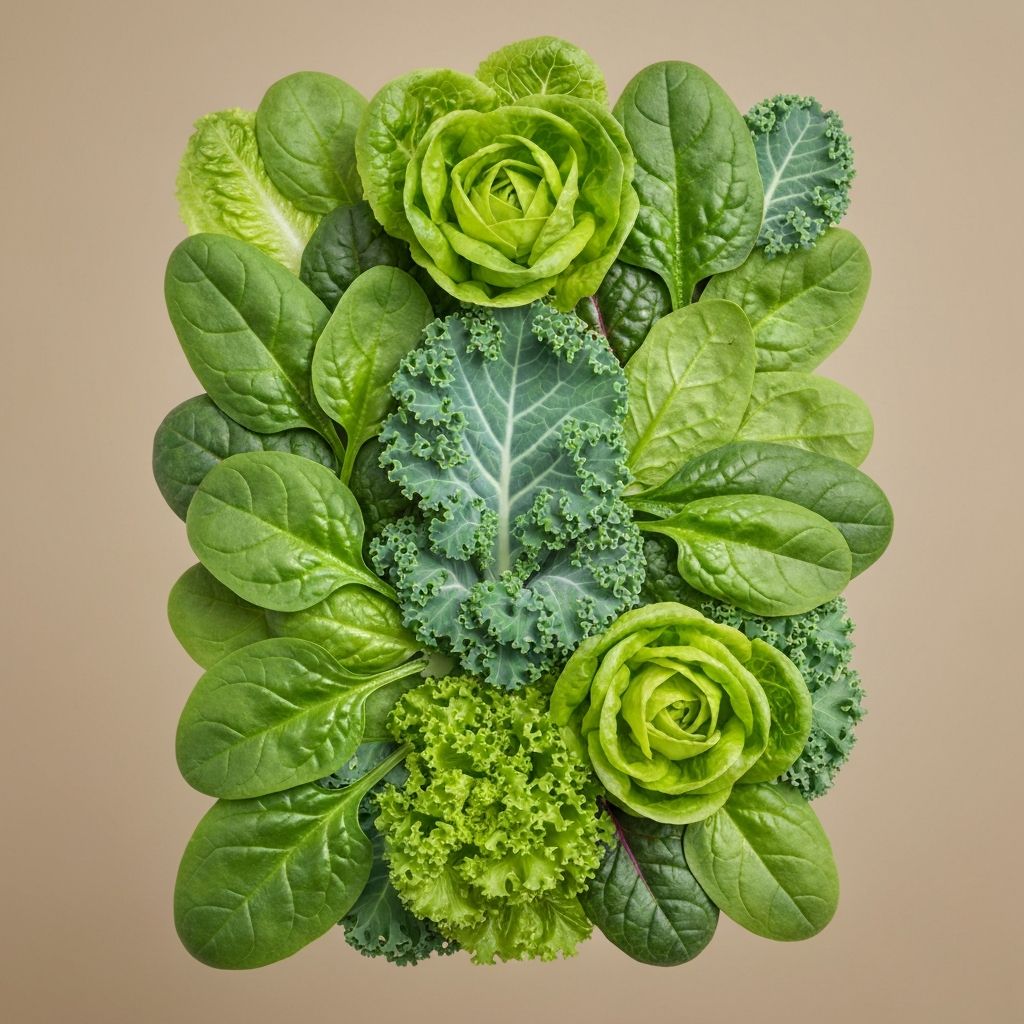
Leafy Greens: Structure and Composition
Deep analysis of lettuce varieties and similar leaves, examining their cellular architecture and nutritional profiles.
Explore more details →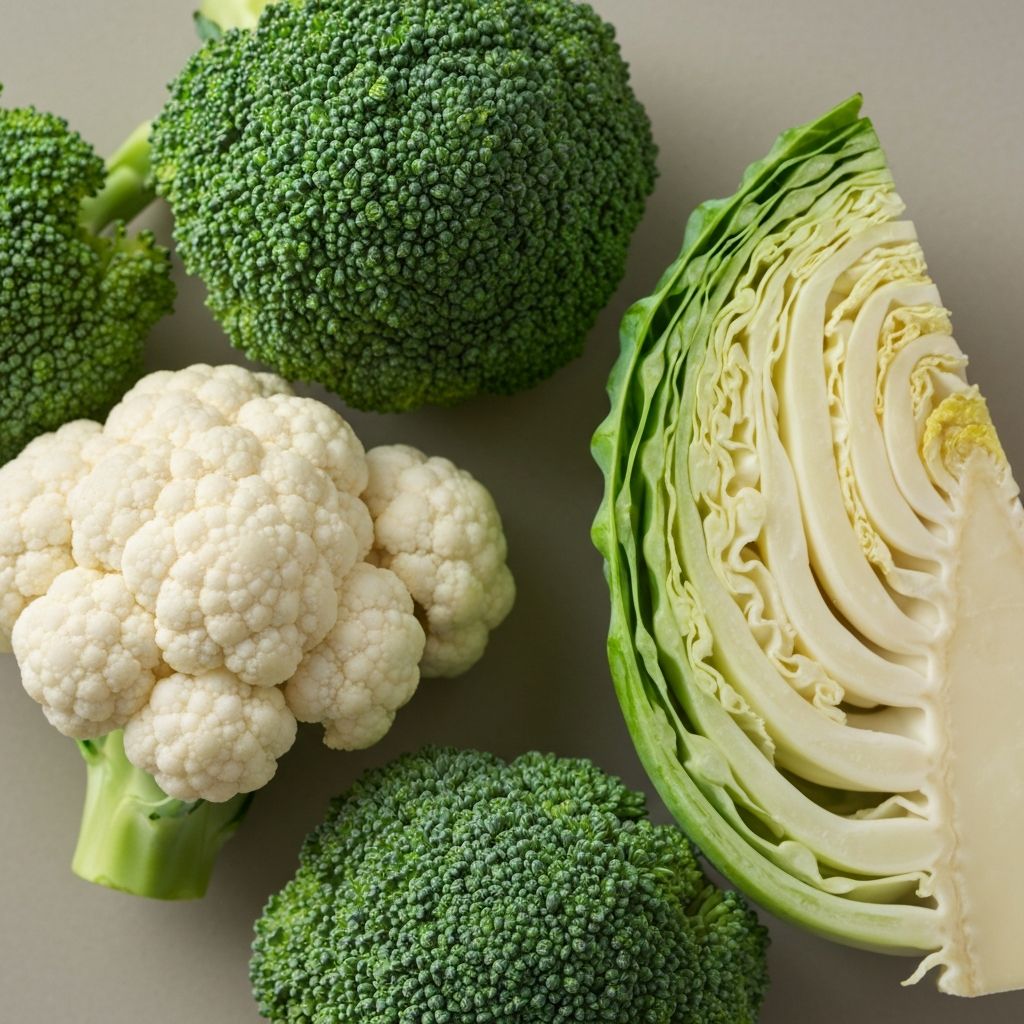
Cruciferous Vegetables Nutritional Profile
Detailed analysis of broccoli, cauliflower, cabbage and related species, including their structural and nutritional characteristics.
Explore more details →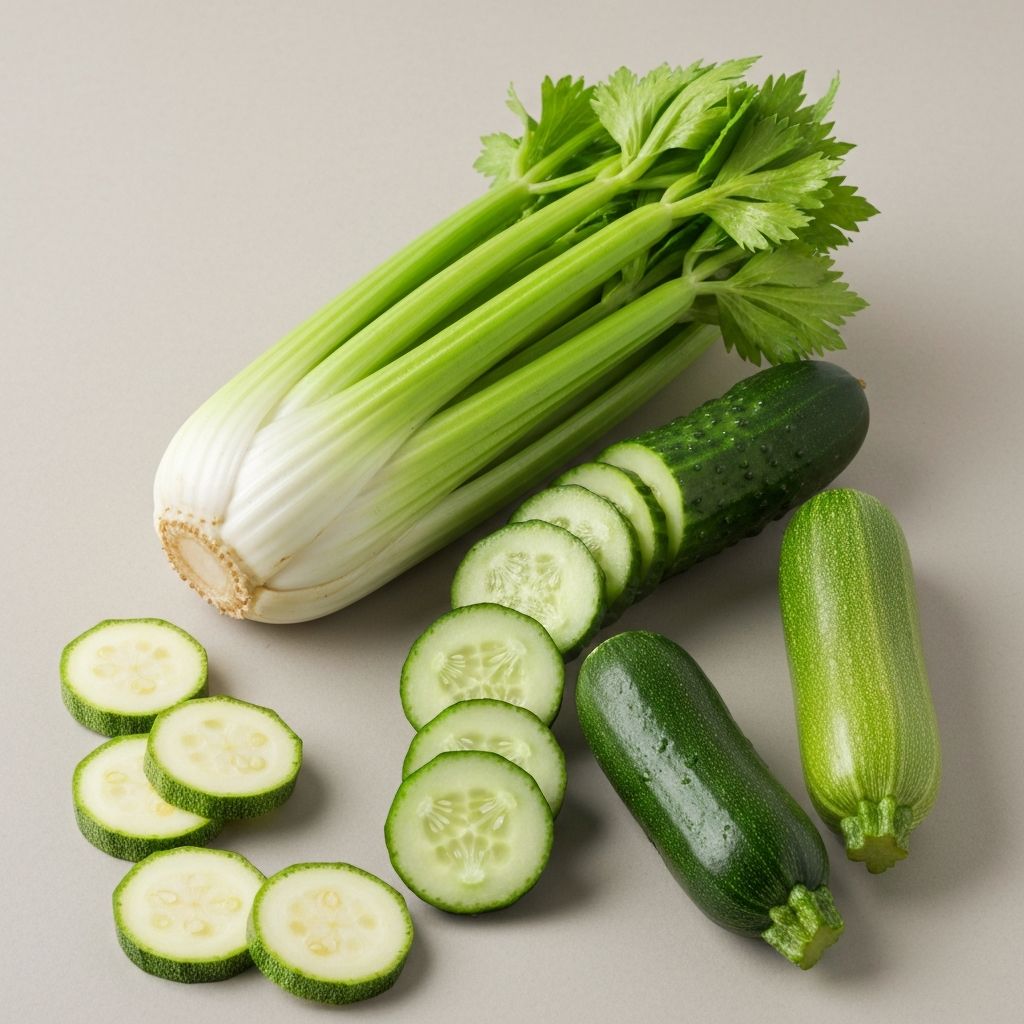
High-Volume Low-Density Vegetables
Examination of cucumber, celery, and courgette—vegetables representing the extreme end of the water and low-density spectrum.
Explore more details →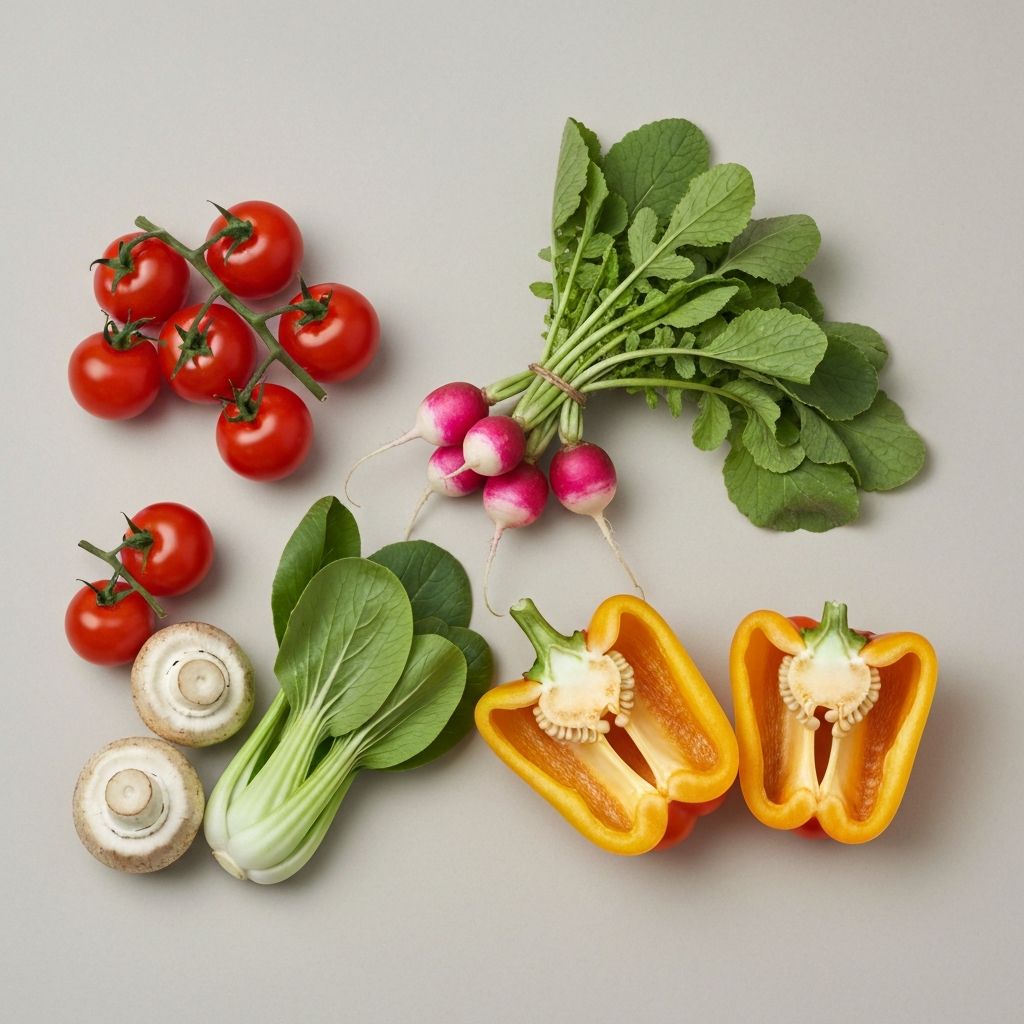
Other Commonly Available Low-Energy Vegetables
Information on tomatoes, peppers, radishes, mushrooms, and additional produce items with low energy density characteristics.
Explore more details →Continue Learning About Vegetables
Discover more detailed information about vegetable composition and explore related educational content.
See additional articles