Leafy Greens: Structure and Composition
In-depth examination of lettuce varieties and similar leaves, exploring their cellular architecture, structural characteristics, and nutritional profiles.
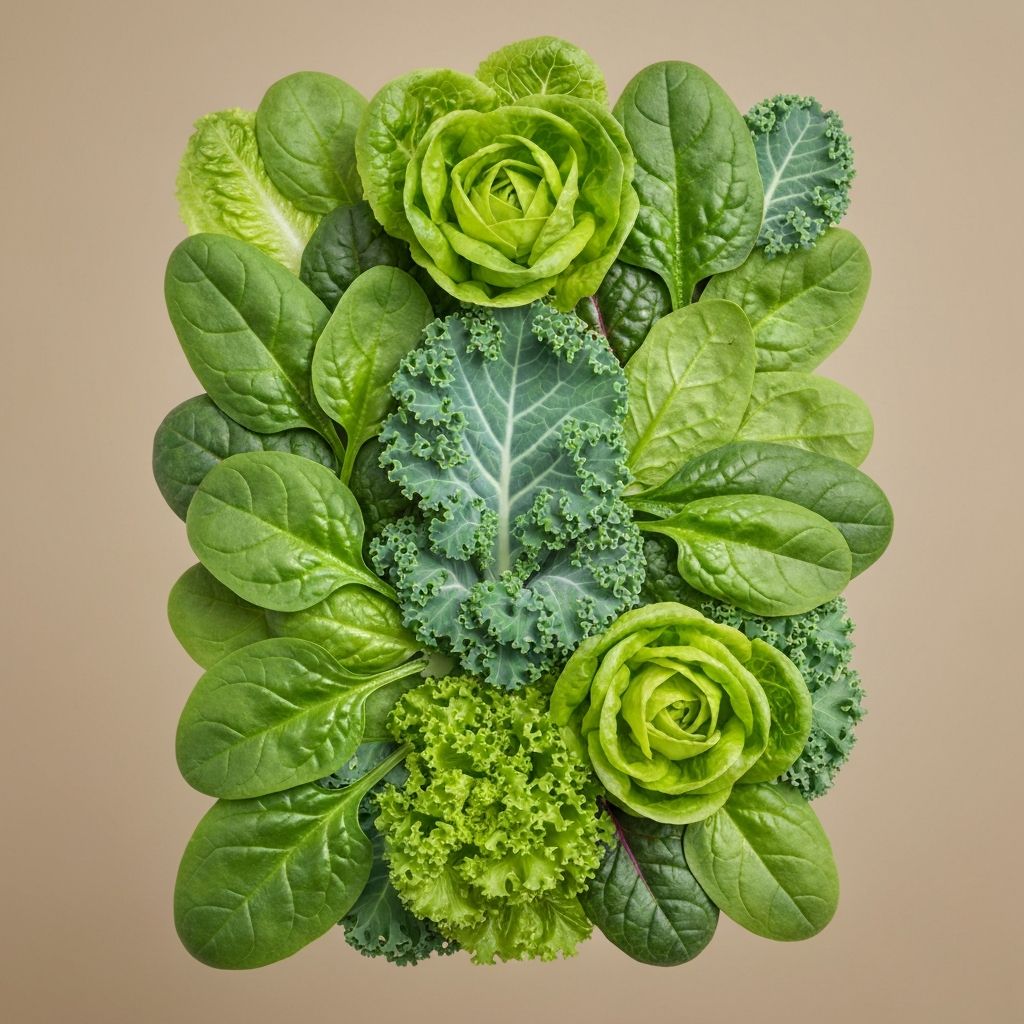
Overview of Leafy Green Vegetables
Leafy greens represent one of the most nutrient-dense vegetable categories. These vegetables derive from the photosynthetic leaf portions of plants and display high water content ranging from 84–96%. The structural features of leaves—composed primarily of thin-walled cells designed for light capture and gas exchange—directly influence their textural and compositional characteristics.
Lettuce Varieties
Lettuce varieties display significant structural differences despite similar caloric profiles. Iceberg lettuce features tightly layered leaves with substantial air spaces between layers, creating a crisp texture and exceptionally low energy density (approximately 15 kcal/100g). Romaine lettuce displays more rigid ribs with softer leaf portions. Butterhead varieties possess softer, more delicate leaf structures. Despite these structural variations, all lettuce varieties maintain energy density in the range of 15–17 kcal/100g due to consistently high water content (92–96%).
Spinach Characteristics
Spinach leaves contain approximately 91% water and approximately 23 kcal/100g. Unlike lettuce, spinach leaves possess smoother surfaces without substantial air pockets. The cellular structure of spinach includes higher concentrations of certain minerals than lettuce, particularly iron and manganese. Raw spinach leaves display a slightly denser cellular arrangement than lettuce varieties.
Kale and Other Hearty Greens
Kale represents a structurally distinct category within leafy greens. Its leaves display more substantial cell walls and lower water content (approximately 84%) compared to other leafy vegetables. This reduced water content results in higher energy density (approximately 49 kcal/100g), though kale remains well within the low-density category. Other hearty greens like chard display intermediate characteristics between delicate lettuce and robust kale.
| Leafy Green | Water % | kcal/100g | Fibre g/100g | Structure |
|---|---|---|---|---|
| Iceberg Lettuce | 96% | 15 | 0.6 | Crisp, air pockets |
| Romaine Lettuce | 95% | 17 | 0.6 | Rigid ribs, softer leaves |
| Spinach | 91% | 23 | 2.7 | Smooth, dense |
| Kale | 84% | 49 | 3.6 | Robust, textured |
| Chard | 92% | 19 | 1.6 | Delicate leaves, prominent ribs |
Cellular Architecture and Perceived Texture
The perceived crispness of leafy greens derives from cellular turgor pressure—the force exerted by water within plant cells against their walls. Higher water content and intact cellular structures create greater turgor, resulting in crisp texture. The arrangement of cells, size of air spaces, and rigidity of cell walls all influence how leafy greens are perceived when consumed.
Explore Other Vegetable Families
Learn about cruciferous vegetables and other low-density produce.
Read next article